Plant Science Leaders - Doug Brinkman, University of Minnesota
Nov 19, 2025
With a background in chemistry and plant photobiology, Doug Brinkman brings a rare dual perspective to his role - the science happening inside the plant growth chambers and the systems that sustain it. His work supports a wide spectrum of plant science research, from crop breeding and turf management to forestry and plant pathology - helping ensure Minnesota remains a hub for agricultural innovation.
As a Facility Manager for the Minnesota Agricultural Experiment Station (MAES) on the University of Minnesota’s Saint Paul campus, Doug oversees 145 growth chambers in 11 plant growth rooms spread across eight buildings.
Conviron sat down with Doug to discuss his evolution from researcher to facility manager, the symbiotic relationship he’s built with scientists on campus, and how his work ensures Minnesota’s plant growth chambers continue to fuel discovery and innovation.
Tell us about your role at the University of Minnesota
I currently manage about 145 growth chambers across eleven rooms and eight buildings on the Saint Paul campus. Prior to 2016 each department managed its own chambers, but when several managers were nearing retirement it became clear that we needed to centralize.
Now growth chamber management across the campus is under the MAES umbrella, which allows us to provide consistent support across departments and experiments. It’s my responsibility to make sure they all run smoothly and that the equipment is meeting our researchers’ needs.
You began as a researcher yourself before moving into facility management. What was that transition like?
My undergraduate degree is in chemistry and I worked in plant photobiology during my early career. I started managing chambers in horticultural sciences around 2007 as part of my research responsibilities, and over time, as more departments asked for help, it naturally evolved into a full‑time role.
That background has been invaluable. Having done research myself, I understand what researchers are trying to accomplish and how sensitive their experiments can be to environmental conditions. I can talk to them about things like light quality or temperature variation from a scientist’s perspective. That shared understanding makes collaboration much easier.
How do you support researchers who use the chambers?
It's a very symbiotic relationship. I’m a facilitator and an enabler; I maintain the chambers, but the researchers bring them to life. When someone new starts, I meet with them to learn what they’re trying to do and select the right chamber for their needs. Some people have never used one before, so part of my job is orientation.
A lot of researchers, for example, are excellent in the lab but haven’t grown plants before, so I work to bridge that gap. I walk them through chamber programming, make sure they understand how to read the control panel and what to expect as the system responds to different settings.
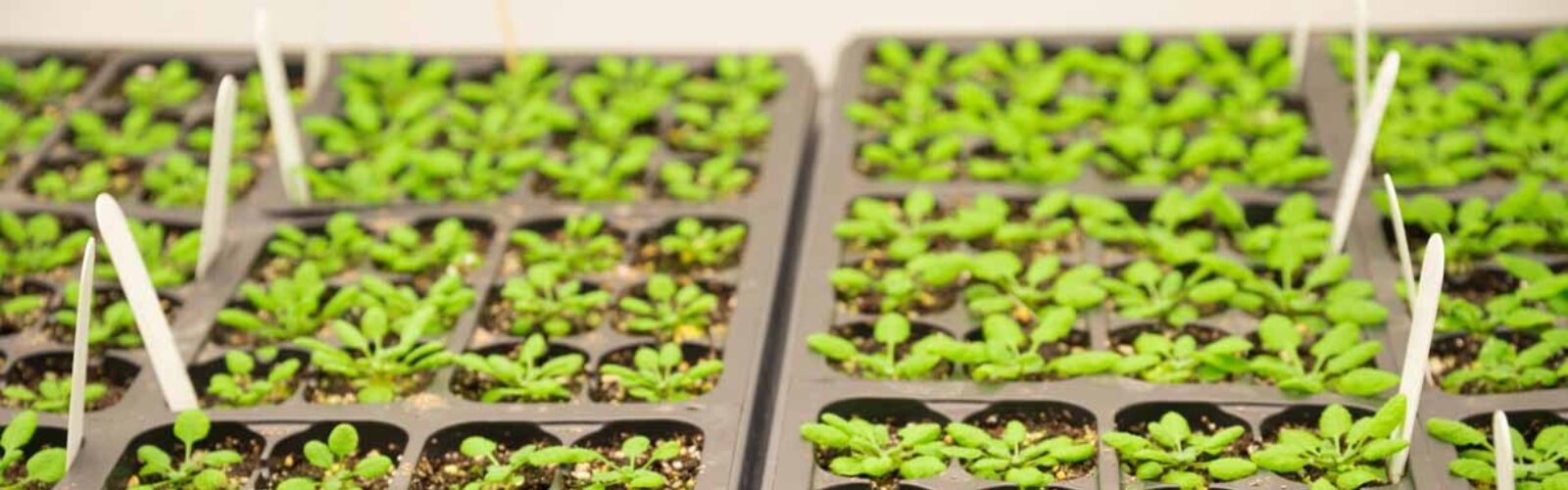
The MAES manages environmentally controlled growth chambers in locations across the St. Paul campus. The chambers are programmable and can sustain consistent environmental control for temperature, daylength, lighting intensity, etc. The capabilities of the chambers allow researchers to investigate plant growth and development of several plant species of interest from Arabidopsis to soybean.
How do you keep such a large and varied fleet of chambers running smoothly?
I walk through the areas daily to make sure everything is holding temperature and performing correctly. The older E15s and E8s are reliable but require hands-on maintenance and don’t have centralized monitoring.
The newer Conviron models, like the PGW40s, have central management and the newest PGR15s have data logging on the chamber controller, which makes monitoring much easier. Retrofitting older chambers can be expensive, so I have to prioritize the budget. My goal is to always keep our full suite of systems operating at a level that can support the range of research happening at the University.
What kind of research takes place in these chambers?
The variety of research we support is a big part of what makes my job so interesting. We’ve got teams working on soybeans, barley, and other agronomic crops; forestry researchers studying photosynthesis; turf specialists examining cold tolerance; and even projects involving algae and CRISPR. It really runs the gamut.
Without these chambers, much of the research we do at the University simply wouldn’t be possible. It’s helping to move plant science forward.
Doug Brinkman, Growth Chamber Manager, Minnesota Agricultural Experiment Station
You often emphasize documentation and training. Why are those so important?
When researchers start using growth chambers, they often know the science but not the practical side of growing plants. My role is to help them connect those dots—because in a controlled environment, even small changes in temperature, humidity, or light can really alter results. If you don’t document what’s happening, you’ll lose the ability to understand why something worked or didn’t.
That’s why I’m always stressing documentation. The older chambers don’t have data logging, so I tell researchers to keep a notebook or use a datalogger. Even with newer systems, I remind them to download and store their data. Keeping track of those details is just part of practicing sound science.
How are upgrades and replacements funded or prioritized?
We operate as an internal service organization (ISO), so our budget flexibility is limited. We have to stay within 10-15% of our federal funding targets, which means we can’t use daily operating funds for new equipment. Instead we look for other sources, like grants, energy management incentives, or university support. Sometimes researchers include chamber upgrades in their own grants, which helps a lot.
When it comes to replacements, we have to be strategic. If a chamber’s capabilities no longer match the needs of researchers, it goes to the top of the list. We want to make sure our resources are aligned with the projects that need them most.
What excites you most about being a facility manager?
The most exciting thing about growth chambers is the level of control and diversity of research they make possible. Unlike working in the field—where you’re beholden to natural conditions and can only react— working in plant growth chambers is enabling. You can plan and carry out research knowing exactly in what conditions you will be working. The growth chambers greatest strength is reproducibility.
Without these chambers much of the research we do at the University simply wouldn’t be possible. The diversity of projects they make possible and capabilities they offer are what make this facility so special. It’s a resource that many other institutions don’t have in this scope or number, and it's helping to move plant science forward.