Dr. Simon Krattinger is a leading molecular geneticist and Professor at King Abdullah University of Science and Technology (KAUST) in Saudi Arabia. A globally recognized expert in wheat genetics and disease resistance, Dr. Krattinger leads groundbreaking research on combating wheat rust—a devastating fungal disease that causes massive wheat losses around the world.
Originally from Switzerland, Dr. Krattinger made the move to Saudi Arabia to leverage KAUST’s cutting-edge facilities and collaborative research environment. Through his work, he is developing innovative solutions to protect global food security and address pressing global issues related to sustainable agriculture.
With state-of-the-art growth chambers, advanced genomic tools, and a commitment to solving real-world agricultural challenges, Dr. Krattinger and his team are poised to make lasting impacts on global wheat production and crop health.
Recently Conviron sat down with Dr. Krattinger to learn more about his career journey into plant science, his current research, and his advice for the next generation of plant scientists.
It all started with one lecture during my undergrad. I was studying genetics and genomics in the early 2000s—it was around the time when Dolly the sheep had been cloned, and the human genome was being sequenced. I was fascinated by the power of genetic information and how we could not only read the genetic code but potentially use it to improve agriculture and health.
During that time, I attended a lecture that highlighted food security challenges and how genetic improvements could transform crop production. It was that combination of challenges and opportunities that drew me to plant science. I knew then that I wanted to focus on crop genetics, and I carried that passion forward into my graduate studies and career.
It was a bit of coincidence, really. I got connected with some people from KAUST back in 2016 and learned about an open position. At first, I wasn’t sure about moving to Saudi Arabia, especially since the country was quite closed at that time. But once I visited and saw the campus and facilities, I knew it was the right place.
KAUST is like a village dedicated entirely to science. Everyone lives on campus, and there’s this unique sense of community among researchers. KAUST is the kind of place where big ideas can actually turn into real solutions, supported by world-class facilities. The idea of tackling sustainable agriculture in the desert was also an exciting challenge.
What is your current research focus?
I’m a molecular geneticist by training, so my research focuses on
understanding the genetic basis of disease resistance in wheat. Wheat is
the most widely cultivated crop in the world, and rust diseases are one
of the biggest threats to its production.
Rusts are fungal diseases that cause around 50 million tonnes of
wheat loss per year—roughly equivalent to a million rail cars full of
grain. What’s particularly problematic is that rust infections often
occur late in the growing season, after farmers have already invested
significant time and resources.
Instead of reaching the plate, that energy essentially ends up
feeding the fungus. Our research aims to identify the genes that control
disease resistance and understand the molecular mechanisms involved.
We’re also looking at close relatives of wheat to discover genes we can
breed into new cultivars that are resistant to rust.
Our goal is to develop cultivars that have durable resistance by combining multiple resistance genes. If we can figure out the best gene combinations and how to deploy them effectively, we could significantly reduce the impact of rust diseases on global wheat production.
Dr. Simon Krattinger, Professor of Plant Science & Molecular Genetics, KAUST
What is the significance of wheat rust?
Rust diseases are ubiquitous—every wheat-growing region in the world
is affected to some extent. The problem is that the pathogens adapt
quickly. Even when breeders release disease-resistant cultivars, the
resistance often only lasts around five years before the fungus evolves.
Our goal is to develop cultivars that have durable resistance by
combining multiple resistance genes. If we can figure out the best gene
combinations and how to deploy them effectively, we could significantly
reduce the impact of rust diseases on global wheat production.
How are you using advanced genomic tools in your research?
Wheat has a massive genome—about five times larger than the human
genome—so pinpointing individual disease resistance genes is a huge
challenge. When I was working on my Ph.D. around 2005, identifying a
single gene could take 10 years.
But with recent advancements in genomics and computing power, we’ve
managed to shorten that timeline to just six months. This is exactly the
needle we’re trying to move. We’re using what I call “genomics-assisted
gene cloning” to make the process faster and more efficient.
Combining DNA sequencing, computational analysis, and advanced
modeling has completely transformed our ability to identify and deploy
disease resistance genes. I think within the next 5 to 10 years, we’ll
have enough knowledge to really make significant progress in solving the
wheat rust problem.
What role does KAUST play in your research success?
KAUST is uniquely positioned to support advanced research. One of our
biggest assets is of course access to state-of-the-art equipment,
including one of the fastest supercomputers in the Middle East. That
computational power is crucial for genomic analysis.
What we’ve done with manufacturers such as Conviron is to build
growth chambers that give us highly controlled environments for pathogen
work. The ability to maintain precise conditions while conducting
infection assays is essential for our research. Plus, we have excellent
molecular biology labs and greenhouse facilities for larger-scale
experiments.
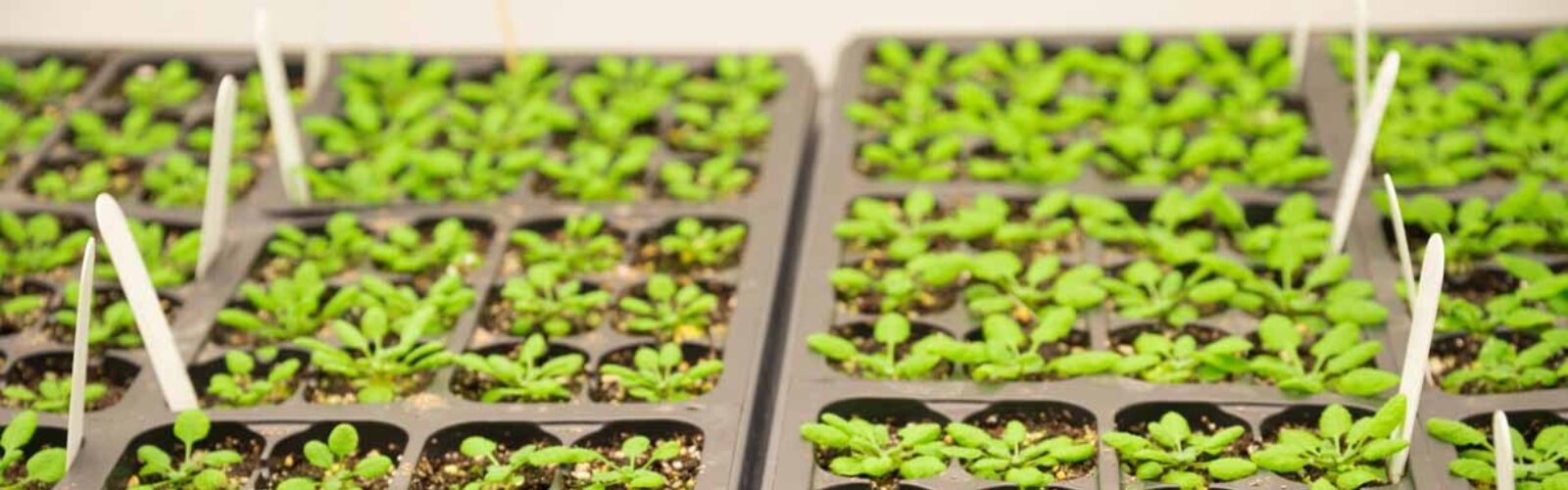
Today, the chambers are already accelerating several high-impact projects. The team is cultivating Nicotiana
plants as part of an effort to engineer plant immune receptors for
durable, broad-spectrum resistance against the most devastating crop
diseases. The chambers also support inoculation experiments with wheat
rust, enabling the discovery of new resistance genes. Researchers are
also growing diverse wheat varieties to study and reintroduce lost
genetic traits into modern breeding, including the ‘Saudi Wheat Landrace
Initiative’, which maps genetic diversity in heritage wheat from across
the Kingdom. Alongside active research, the facility includes a seed
storage room for long-term preservation of valuable crop seeds,
safeguarding genetic resources for future breeding and food security.
Another critical aspect of KAUST’s support is the collaborative
environment. We work alongside experts in computational biology,
genomics, and data science, which significantly enhances the quality and
impact of our research. Being part of a global network of plant
scientists also means we can quickly share findings and collaborate on
new approaches to combating wheat rust and other plant diseases.
What was it like designing and building the new KAUST facility?
This was my first time planning a plant growth facility from scratch, and it was definitely a learning experience. We spent about a year just designing and mapping out what we needed, from growth cabinet sizes to lighting options. It was a lot of small decisions that added up. Collaboration was one of the keys to our success throughout the process.
We made sure to involve all the plant science faculty at KAUST to obtain input on what the facility should include. We also worked closely with our vendors and other partners to make sure the design met our needs.
Start to finish, it took about four years from initial planning to opening the facility. It was a little bit longer than we anticipated, but I think it’s exactly what we wanted. Looking back, I’m really proud of how it turned out.
What advice would you give to students considering a career in plant science?
Sustainable agriculture is one of the biggest challenges of our time.
We need to increase cereal production by 50% in the next 25 years to
meet global food demands. Agriculture accounts for 70% of global
freshwater use and is a significant contributor to greenhouse gas
emissions. Finding ways to grow food more sustainably and efficiently is
critical, and plant science plays a vital role in that effort.
To students considering a career in plant science, I’d say follow
your passion. It definitely isn’t a nine-to-five job. It requires a lot
of dedication and genuine interest. Be curious and open to new ideas.
Get involved in research early through internships or lab work, and
don’t hesitate to ask questions and seek mentorship.
Fortunately, plant science involves so many disciplines—genetics,
computing, agriculture, policy, and more. Students can find what excites
them personally. There’s a place for everyone who wants to make a
difference.